
Mosquito net for windows: quick answer
A good mosquito net for windows is a fine mesh that fits the frame tightly, with no gaps at the edges. Fixed or Velcro nets suit windows you rarely open, while sliding, pleated or roller nets suit windows you use every day. Fibreglass mesh is affordable and easy to see through, whereas stainless steel lasts longer. So check the mesh count, the edge seal and how easily you can clean it before you buy.
Choosing a mosquito net for windows looks simple until you see the options: Velcro kits, magnetic frames, sliding shutters, pleated screens and roller blinds, each in several mesh materials. Prices and claims vary widely, and most product pages say little about what actually keeps mosquitoes out. As a result, many people buy twice.
This guide explains the main types, the materials and mesh counts, and how to measure and maintain your nets. It also covers what health bodies say about window screens, so you can make one sensible purchase instead of several hopeful ones.
Why fit a mosquito net on your windows?
Window screens are a standard, recommended way to keep mosquitoes outdoors. For example, the World Health Organization lists fitting screens on windows among its dengue prevention measures, and it notes that the mosquitoes that spread dengue are active during the day. Likewise, the US CDC advises people to use screens on windows and doors and to repair any holes.
Indian guidance also points the same way. For instance, a 2025 Delhi Directorate of Education circular on dengue, chikungunya and malaria advises wire mesh on windows, and its checklist extends that to doors. In addition, the national handbook attached to that circular notes that the Aedes mosquito bites during the daytime, when windows are most likely to be open.
There is also field evidence. In a cluster-randomised study in Acapulco, Mexico, published in Emerging Infectious Diseases in February 2015, homes fitted with insecticide-treated screens on doors and windows had far fewer adult Aedes aegypti mosquitoes. After 12 months, 18% of treated homes had female mosquitoes indoors, compared with 35% of control homes. However, the study used insecticide-treated screens, and the authors noted that the effect on dengue cases still needed study.
Types of mosquito net for windows
Indian sellers offer several designs, as housing.com’s overview of window mosquito nets shows. The right one depends mostly on how often you open the window and what kind of shutter it has.

| Type | How it works | Good for | Watch out for |
|---|---|---|---|
| Velcro or fixed net | The mesh sticks or screws onto the frame and stays shut. | Windows you seldom open, such as store rooms | You must peel it off to reach the glass, so it suits rarely used windows. |
| Magnetic net | Magnetic strips hold the mesh to a steel tape on the frame. | Renters, because it comes off without much damage | However, weak magnets can leave small gaps at corners. |
| Sliding net | A mesh shutter runs in its own track beside sliding glass. | Aluminium or uPVC sliding windows | Dust in the track can stop it closing fully, so clean it often. |
| Pleated net | Folded mesh opens and closes like an accordion. | Wide openings and windows you use often | Pleats collect dust, so they need regular brushing. |
| Roller net | The mesh rolls into a cassette at the top or side. | Windows where you want the mesh out of sight | Springs and side channels also wear over time. |
| Hinged frame net | A framed mesh panel opens like a small door. | Casement windows that open outwards | It needs space to swing, as well as a good latch. |
In short, a fixed net costs least but gets in the way, whereas moving designs cost more but fit daily life better. Also, if pigeons visit the same window, a plain mosquito mesh will not stop them; our comparison of balcony, terrace and window nets compared explains the stronger options.
Which mesh material should you choose?
Whichever mosquito net for windows you pick, the mesh is the part that actually stops insects, so it deserves more attention than the frame. In practice, most products in India use one of four materials.
Fibreglass
Fibreglass is the most common screen material. According to US screen supplier Metro Screenworks, it is cost-effective, but it breaks down faster and needs replacing more often than tougher meshes. Even so, it is a sensible choice for upper-floor windows that pets and children cannot reach.
Polyester and nylon
Polyester mesh is light and cheap, and it appears in many pleated and Velcro kits. However, thin polyester can sag or tear near the edges, so check the stitching and the border tape.
Stainless steel and aluminium
Metal mesh costs more, but it resists tearing. For example, Metro Screenworks describes its stainless steel security screen as its strongest option. Thicker wire is more durable, although it is slightly harder to see through. So metal suits ground-floor windows, homes with cats or dogs, and coastal or industrial areas only if the seller confirms corrosion resistance.
Housing.com also lists cotton and anti-pollen meshes. Anti-pollen mesh is finer, so it may also cut dust, but finer mesh usually lets through less air as well.
Mesh count explained: what the numbers mean
Mesh count is the number of strands per inch in each direction, written as two numbers such as 17×14. The higher the numbers, the tighter the weave. Metro Screenworks says a standard 17×14 screen keeps out most mosquitoes, but tiny biting midges called no-see-ums can get through, and it recommends 20×20 mesh for them.
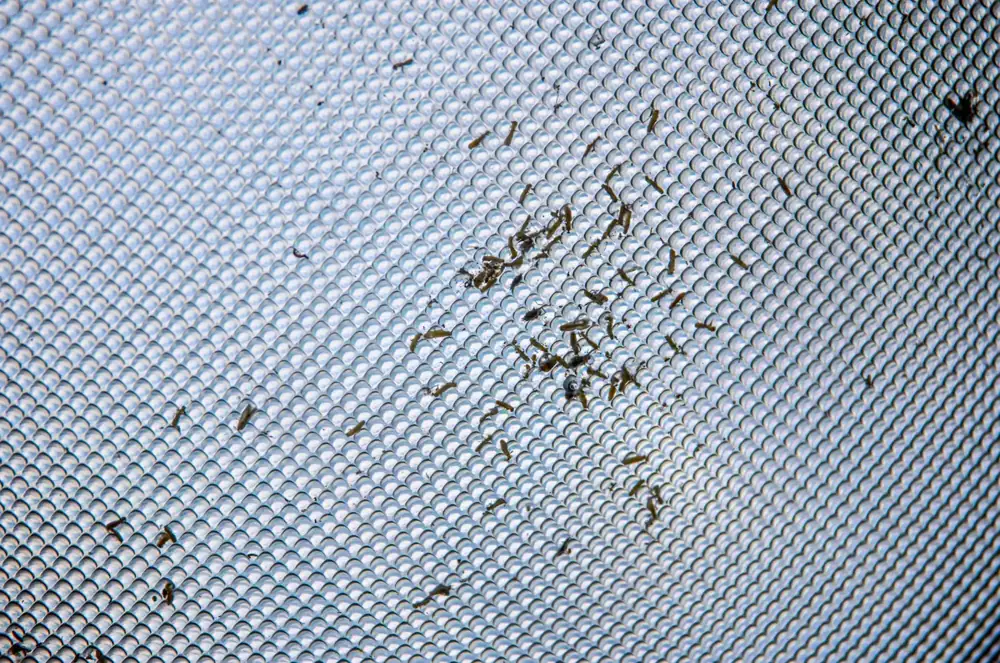
Indian listings often skip the count and use vague words such as “fine” or “premium”. Therefore, ask the seller for the mesh count in writing. A tighter mesh blocks smaller insects, but it also reduces airflow and visibility slightly, which matters in humid rooms. For a deeper look at how hole size and thread thickness trade off against each other, see our guide on how mesh gauge works for pigeon nets.
How to measure windows for a mosquito net
Accurate measurements prevent the most common problem, which is gaps. Always measure from inside the room, and never lean out of a window above the ground floor to do it.
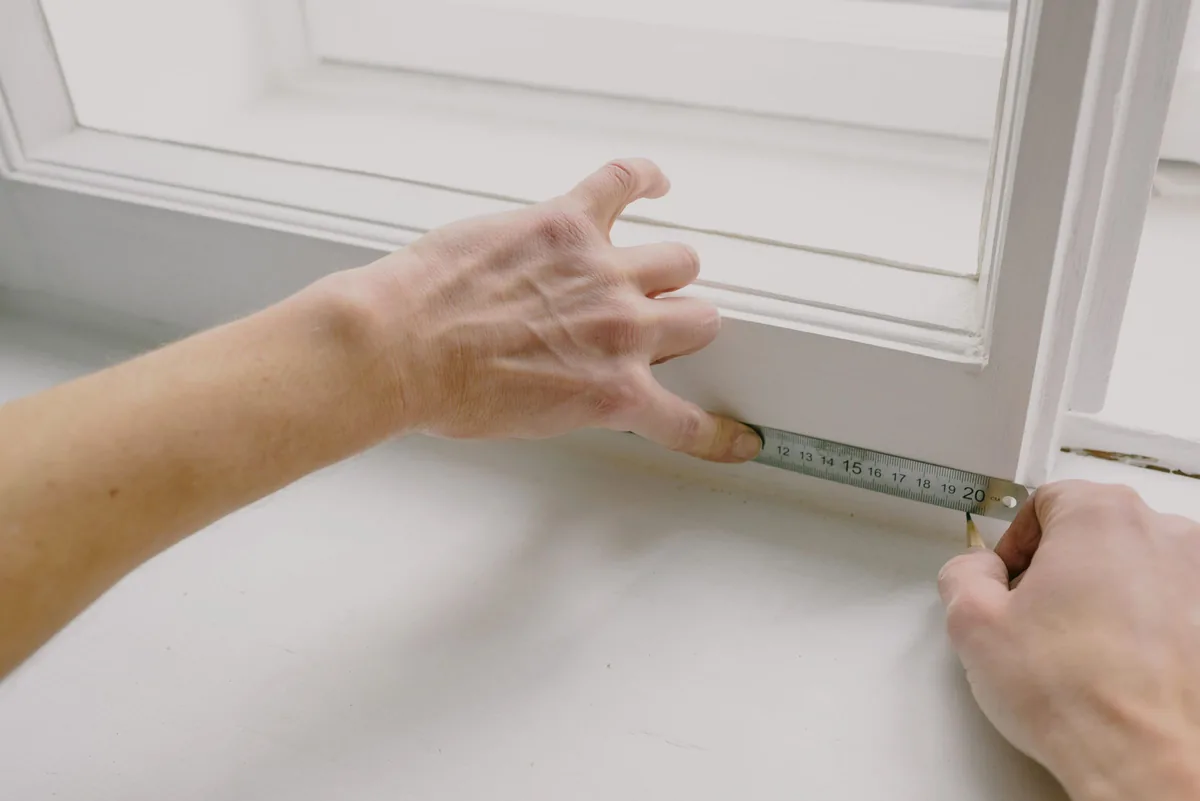
- First, decide whether the net will sit inside the window recess or on the outer face of the frame.
- Next, measure the width at the top, middle and bottom, and note the smallest figure.
- Then measure the height on the left, middle and right, again noting the smallest figure.
- After that, check whether the frame is square by measuring both diagonals; a big difference means you need flexible edge seals.
- Finally, note the handle positions, grills and any sliding track that could block a frame.
If the window has a fixed grill, the net usually goes on the inner side of the grill. For tall or awkward openings, especially on higher floors, it is safer to let a trained installer measure and fit the frame.
Questions to ask before buying a mosquito net for windows
Before you pay, a few direct questions separate a good product from a disappointing one:
- What is the mesh material, and what is the mesh count?
- How does the net seal at the corners and along the bottom edge?
- Can I remove the mesh for washing, and is a replacement mesh available on its own?
- Does the frame need drilling, and will my landlord or society allow that?
- What does the warranty cover, and for how long?
Also ask whether the price covers fitting. If you plan to install it yourself, our article on DIY vs professional net installation explains which jobs are safe to try and which need a professional.
Cleaning and maintaining your window nets
Dust clogs fine mesh quickly in Indian cities, and a dirty net blocks air as well as light. Fortunately, basic care takes only a few minutes, and a clean mosquito net for windows also lets in more light.
- First, brush or vacuum the mesh gently every week or two.
- Wash removable mesh with mild soap and water, then let it dry fully before refitting.
- Clean sliding tracks and pleat folds so the net closes completely.
- Inspect corners and edges every month, because small tears let mosquitoes in.
- Repair holes promptly, as the CDC advises, or replace the mesh panel.
Before the monsoon, give every net a full check, since that is when mosquito numbers usually rise. Meanwhile, keep the window frame itself in good repair, because a perfect net cannot seal a warped shutter.
A mosquito net for windows is one layer of protection
Window nets work best alongside other steps, though. The Delhi circular advises covering water tanks and containers with tight lids, changing water in vases and plant trays every week, and scrubbing and drying coolers weekly before refilling them. Similarly, the WHO lists repellents, protective clothing and bed nets during daytime sleep among its prevention measures, while the CDC suggests using air conditioning where available.
If anyone at home develops a high fever, severe body ache or rash during mosquito season, see a doctor promptly rather than waiting.
Key takeaways
- Health bodies including the WHO and CDC recommend screens on windows to keep mosquitoes out.
- Choose the net type by how often you open the window, rather than by price alone.
- Ask for the mesh count; 17×14 stops most mosquitoes, while 20×20 also stops tiny midges.
- Fibreglass is affordable and clear, whereas stainless steel resists pets and wear.
- Weekly cleaning and quick repairs keep any mosquito net for windows working.
Mosquito net for windows: FAQs
Magnetic or Velcro nets usually suit renters, because they need little or no drilling. Still, check with your landlord before fixing anything to the frame.
Slightly, yes. Finer mesh and thicker strands block more air, so a standard mesh count is a good balance for most rooms.
Replace it when it sags, tears or stays dirty after washing. Fibreglass usually needs replacing sooner than stainless steel.
Not reliably, since mosquito mesh is thin and pigeons can push or peck at it. For birds, a dedicated bird net or grill mesh works better.
They are less common in retail. A 2015 study in Mexico found treated screens cut indoor Aedes mosquitoes, but ordinary screens still help when they fit well.
If pigeons also use the same windows, Bird Nets Zirakpur fits window and ventilation nets for homes in Zirakpur and the Tricity.
Sources
- World Health Organization, “Dengue and severe dengue” fact sheet (21 August 2025)
- US Centers for Disease Control and Prevention, “Preventing Mosquito Bites” (28 August 2024)
- Government of NCT of Delhi, Directorate of Education, circular on prevention of dengue, chikungunya and malaria with NVBDCP handbook (2025)
- Manrique-Saide and colleagues, Emerging Infectious Diseases, “Use of Insecticide-Treated House Screens to Reduce Infestations of Dengue Virus Vectors, Mexico” (February 2015)
- Metro Screenworks, “A Guide to All Types of Screen Mesh” (18 October 2024)
- Housing.com, “Mosquito nets for windows: Types, materials and cost” (undated, accessed October 2026)