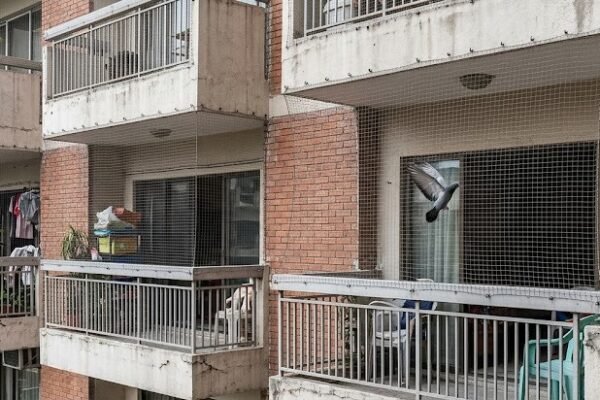
Pigeons in expanding residential sectors around Zirakpur frequently roost on open balconies, leading to persistent hygiene concerns and property damage. Installing a high-density polyethylene net is the most effective solution, but selecting the wrong mesh gauge can leave your home vulnerable or obscure your exterior view unnecessarily.
Understanding Mesh Sizes and Target Bird Species
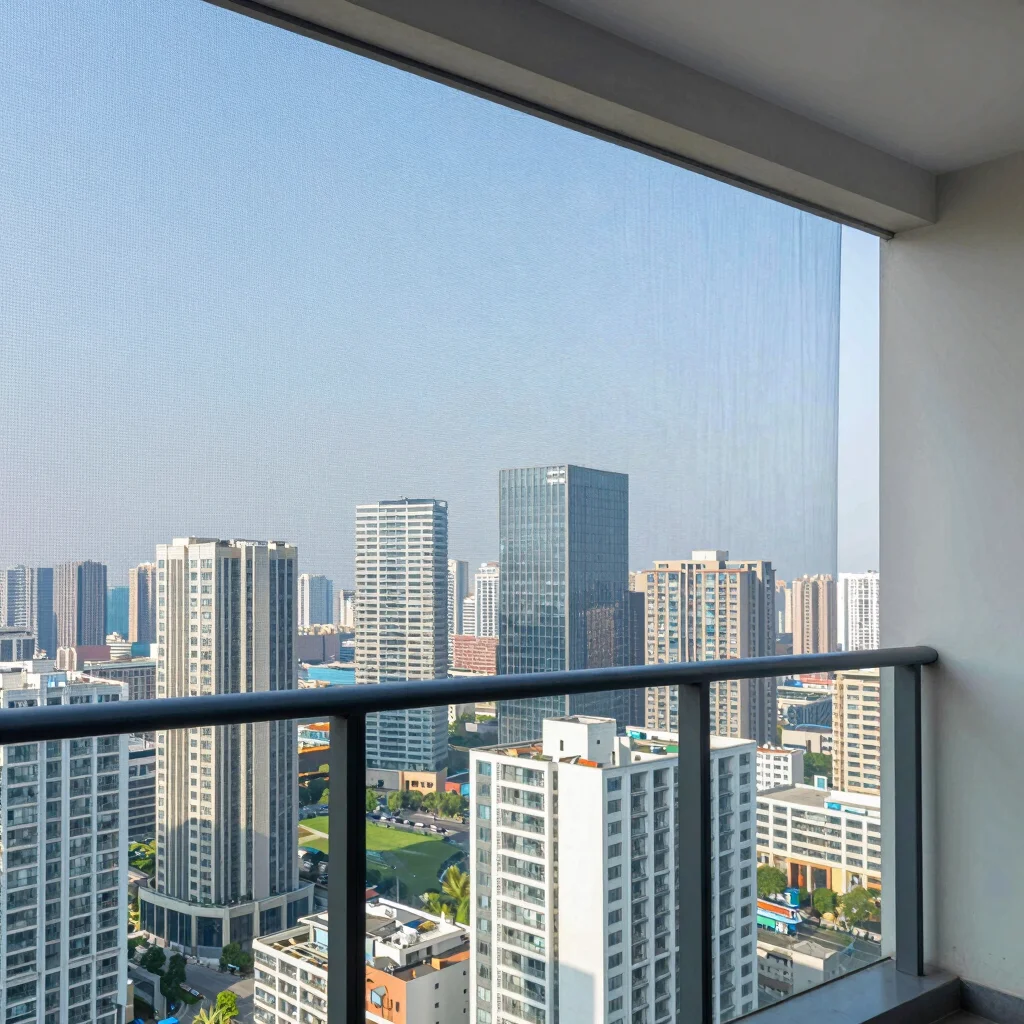
Mesh gauge determines the physical distance between square openings in the net weave. For standard pigeon deterrence, a fifty-millimeter mesh size provides an impenetrable barrier while maintaining maximum optical transparency from inside your living room.
If smaller birds like sparrows or mainas are also entering your utility area, a smaller twenty-five-millimeter mesh is required. Choosing a smaller mesh than necessary increases wind resistance on the netting frame, so matching the gauge to your specific pest problem is crucial.
Material Specs and Sun Resistance
North Indian summer weather subjects balcony fittings to intense direct sunlight and temperature spikes. Standard commercial nylon breaks down rapidly under ultraviolet exposure, becoming brittle and snapping within a few seasons.
Always specify UV-stabilized HDPE netting with high tensile strength. High-density polyethylene maintains structural flexibility, resists moisture absorption, and retains color stability over years of intense weather exposure.
Weatherproof Mounting and Frame Anchoring
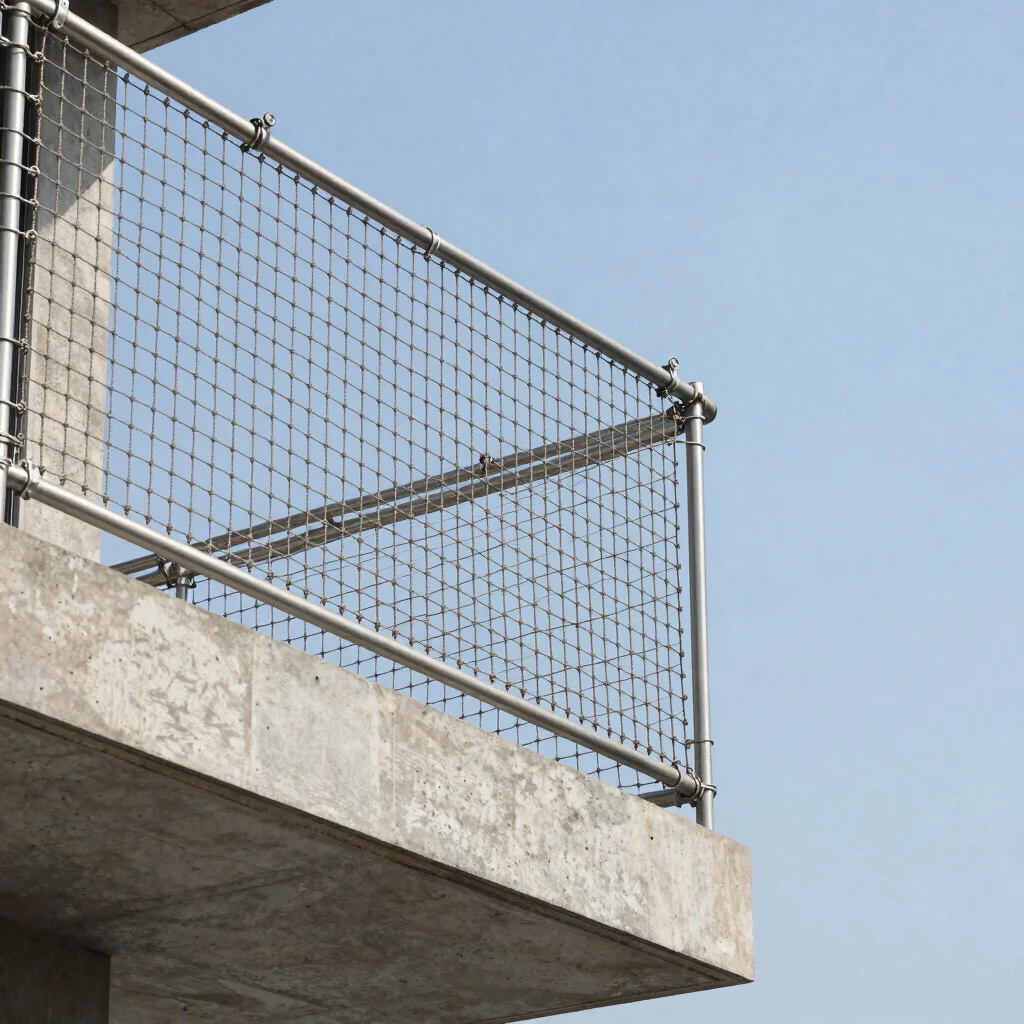
Even the strongest mesh fails if anchored with flimsy hardware. Professional balcony protection relies on stainless steel wire ropes stretched tightly along wall perimeters, secured by robust expansion anchor bolts.
Using durable steel corner hooks ensures the net remains taut without sagging under wind pressure or bird landing impact. Inspect your perimeter masonry carefully to select expansion anchors suitable for brick or reinforced concrete.
Understanding Mesh Gauge Numbers
Mesh gauge typically refers to both the size of each individual opening in the net and the thickness of the strand itself. A finer gauge with smaller openings is more effective at excluding smaller birds like sparrows, while a slightly larger standard gauge is usually sufficient for pigeons, which are considerably larger and can’t fit through the same small gaps a sparrow could.
Standard Gauge for Pigeon Exclusion
Most residential pigeon netting uses a mesh size in the range of 19mm to 25mm, which reliably keeps pigeons out while using less material than a finer gauge would require, keeping both cost and visual bulk lower. This range has become the practical standard for balcony and terrace netting across most installers.
When a Finer Gauge Makes Sense
If your property also has trouble with smaller birds such as sparrows or mynas, a finer mesh gauge, sometimes as small as 12mm to 15mm, is worth considering, since standard pigeon-gauge netting has gaps large enough for these smaller birds to pass through. This is worth discussing during your site visit if you’ve noticed more than just pigeons roosting on your balcony.
How Mesh Gauge Affects Visibility and Airflow
A finer gauge net, while more effective against smaller birds, does reduce transparency and airflow slightly more than a standard pigeon-gauge net. For most homeowners dealing specifically with pigeons, the standard gauge offers the best balance of effectiveness, cost, and minimal visual impact on the balcony’s view.
Mesh Gauge and Net Strength
Gauge and strand thickness aren’t quite the same thing – a net can have a larger mesh size but still use a thick, strong strand, or a finer mesh size with thinner strands. For terraces facing significant wind exposure, it’s worth confirming both the mesh size and strand thickness rather than assuming a finer gauge automatically means a stronger net.
Choosing Gauge Based on Location Type
Standard balconies dealing purely with pigeon activity generally do fine with the common 19-25mm range, while properties near green belts or water bodies that attract a wider variety of bird species may benefit from a finer gauge to cover multiple bird types with one installation.
Frequently Asked Questions
What mesh gauge is best for pigeons specifically?
A standard 19mm to 25mm gauge is generally sufficient to exclude pigeons while keeping cost and visual bulk reasonable.
Do I need a finer gauge if I also see sparrows on my balcony?
Yes, a finer gauge in the 12mm to 15mm range is recommended if smaller birds like sparrows are also a concern, since standard pigeon gauge won’t exclude them.
Does a finer mesh gauge block more light?
Slightly, yes – finer mesh reduces transparency a bit more than standard gauge, though the difference is usually minor for lighter-colored nets.
Is a finer gauge always stronger?
Not necessarily – strand thickness and material quality matter as much as mesh size for overall net strength.
Can different mesh gauges be mixed on one property?
Yes, some properties use standard gauge for most balconies and a finer gauge only in specific areas with a mixed bird problem.
Getting the Right Recommendation
Since the ideal mesh gauge depends on which birds are actually causing problems at your property, mentioning what you’ve observed – just pigeons, or smaller birds too – helps our team recommend the right specification before your free site visit.
How to Measure Mesh Gauge Yourself
If you want to check an existing net’s gauge, measure the distance between two opposite knots or joints in the mesh, which gives you the approximate opening size. Comparing this against the standard 19-25mm pigeon range, or the finer 12-15mm range for smaller birds, gives a quick sense of whether an existing installation matches your actual bird problem.
Gauge Considerations for Commercial Properties
Warehouses, godowns, and commercial terraces sometimes deal with a wider variety of birds than a typical home balcony, including pigeons, mynas, and occasionally crows, which can call for a carefully chosen gauge that balances exclusion effectiveness against material cost over a much larger area than a residential job.
Does Gauge Affect Installation Method?
Finer gauge netting is generally handled the same way as standard gauge in terms of anchoring and tensioning, though its slightly reduced flexibility in some products can mean marginally more careful handling during installation to avoid creases or uneven tension across a large panel.
Will a finer gauge net cost significantly more?
There’s usually a modest cost increase for finer gauge netting due to the additional material used per square foot, though it’s rarely a dramatic difference compared to standard gauge.
Can I upgrade from standard to fine gauge later if needed?
Yes, though this generally means replacing the existing net rather than modifying it, so it’s worth choosing the right gauge from the start if you already suspect a mixed bird problem.
Final Thoughts on Choosing Mesh Gauge
Getting mesh gauge right comes down to correctly identifying which birds are actually causing problems at your property rather than defaulting to whatever gauge is most commonly stocked. A short conversation about what you’ve observed on your balcony or terrace is usually enough for an experienced installer to recommend the right gauge before your site visit even begins.
Why This Detail Is Easy to Overlook
Many homeowners simply ask for “a bird net” without realizing gauge is a meaningful choice at all, which is part of why some installations end up only partially effective if smaller birds are involved alongside pigeons. Raising this specific point yourself when requesting a quote is a simple way to make sure it gets addressed properly.
A Quick Reference Before You Order
If you’re comparing quotes from multiple installers, ask each one to specify the exact mesh gauge included in their price, not just “standard” or “premium” netting as a vague label. This one detail can meaningfully affect how well the final installation performs against the specific birds causing you trouble.
Related Reading
If you’re also deciding between net materials, our HDPE vs nylon comparison covers the other major decision point alongside mesh gauge, and our balcony vs terrace vs window guide looks at how location affects both gauge and material choice together.
Between these three factors – gauge, material, and location – you’ll have a complete picture of what actually goes into a well-specified pigeon net before your installer even arrives for the site visit.
That clarity tends to make the whole decision process quicker and reduces the chance of any mismatch between expectations and the final result.
If in doubt, our team is happy to talk through your specific bird activity over a quick call before recommending a final specification.
This small step upfront often saves a follow-up visit later if the wrong gauge turns out to be only partially effective.
Getting it right the first time is always easier than adjusting after the fact.