Get rid of pigeons: quick answer
The most reliable way to get rid of pigeons from a balcony is to block their access with well-fitted netting and then remove what draws them in: food, water and sheltered nesting corners. Spikes and sticky gels can also help on single ledges and railings. By contrast, ultrasonic gadgets, plastic owls and shiny hanging objects rarely work for long, according to wildlife damage specialists and a peer-reviewed study.
If you want to get rid of pigeons from your balcony, you have probably had enough of scrubbing droppings, pulling twigs out of corners and hearing cooing before sunrise. However, the birds are not there by accident, because a balcony gives them shelter, a flat ledge to rest on and, quite often, a steady supply of food. So the real fix is less about scaring birds and more about changing what the space offers them.
Below, this guide compares the humane methods people use to get rid of pigeons and shows which ones have evidence behind them. It also covers the legal points Indian households should know before touching a nest, plus the jobs that belong with trained installers, especially on high floors.
Why is it so hard to get rid of pigeons once they settle in?
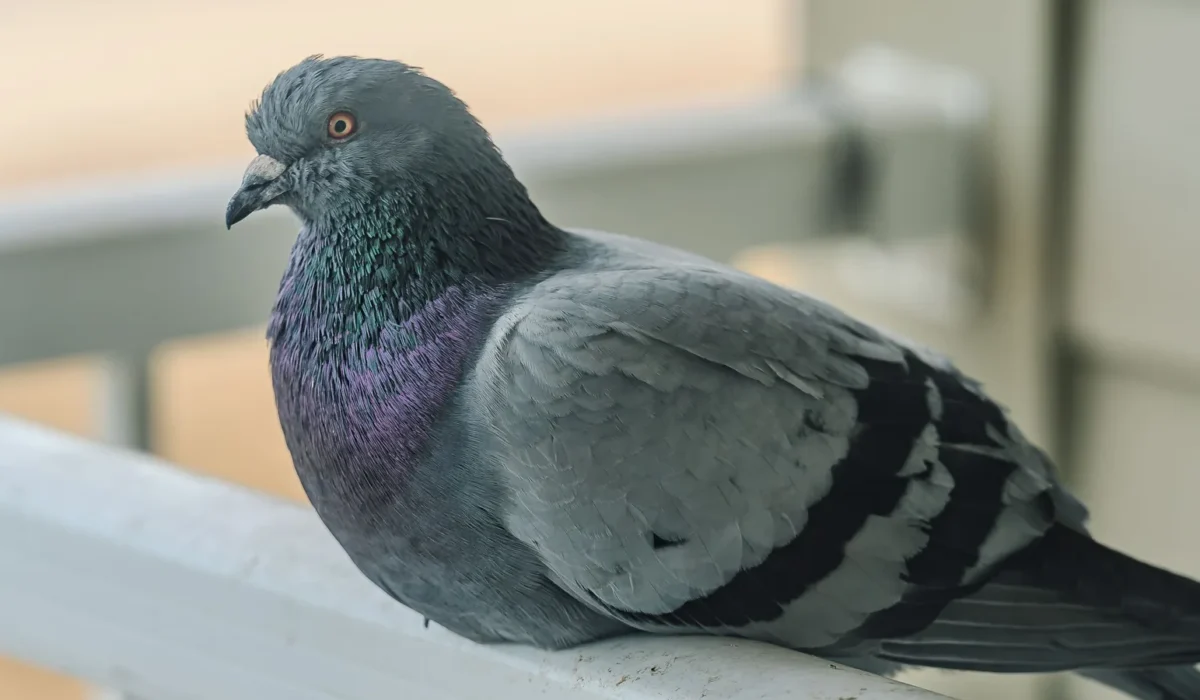
First, it helps to know that pigeons depend heavily on people. For example, the Internet Center for Wildlife Damage Management (ICWDM) describes feral pigeons as highly dependent on humans for food and for places to roost and nest. They mainly eat grain and seed, but they also take garbage and insects. In addition, they breed in every season, with peaks in spring and autumn.
That breeding pattern also explains why a small problem grows so quickly. According to the same source, a female lays one or two eggs, the eggs hatch after about 18 days, and the young leave the nest at roughly four to six weeks. As a result, a single pair can raise five or six broods a year. Once a pair treats your balcony as home, it will keep returning, so half-measures tend to fail.
In practice, three things keep pigeons on a balcony:
- Shelter, such as a covered ledge, the gap behind an AC outdoor unit, or a cluttered corner with old boxes.
- Food and water, for example grain thrown for birds, pet food bowls, spilled seeds from plant pots, or a dripping tap.
- A quiet nesting spot, which means anywhere the birds can sit undisturbed for several weeks.
So every method below works by taking away one or more of these three things. In contrast, methods that only try to frighten the birds leave all three in place, and that is why they usually disappoint.
Humane ways to keep pigeons away, compared
Next, here is a side-by-side view of the options most Indian households consider. In addition, the ratings draw on the ICWDM guidance and the 2014 ultrasonic study listed in the sources.
| Method | What the evidence says | Best for |
|---|---|---|
| Bird netting | ICWDM lists exclusion with netting or mesh as a core long-term method, because it blocks access completely. | Whole balconies, ducts and shafts |
| Spikes or wires | They work on ledges, but birds may cover them with twigs or droppings, so they need clearing. | Parapets, sills and AC unit tops |
| Sticky gel | It lasts about six months to two years, although it fades faster in dusty areas. | Small ledges and signboards |
| Ultrasonic devices | A Swiss Ornithological Institute study found no effect on pigeons, so they are a poor buy. | Not recommended |
| Owls, balloons and flags | ICWDM rates these as having little or no effect, even when moved around. | Not recommended |
| Removing food and water | ICWDM calls this essential for long-term control, since it removes the reason to visit. | Every home, alongside other methods |
Overall, the pattern is clear: physical barriers and removing attractions do the heavy lifting, while gadgets and scare props mostly cost money without solving anything.
Does bird netting really get rid of pigeons for good?
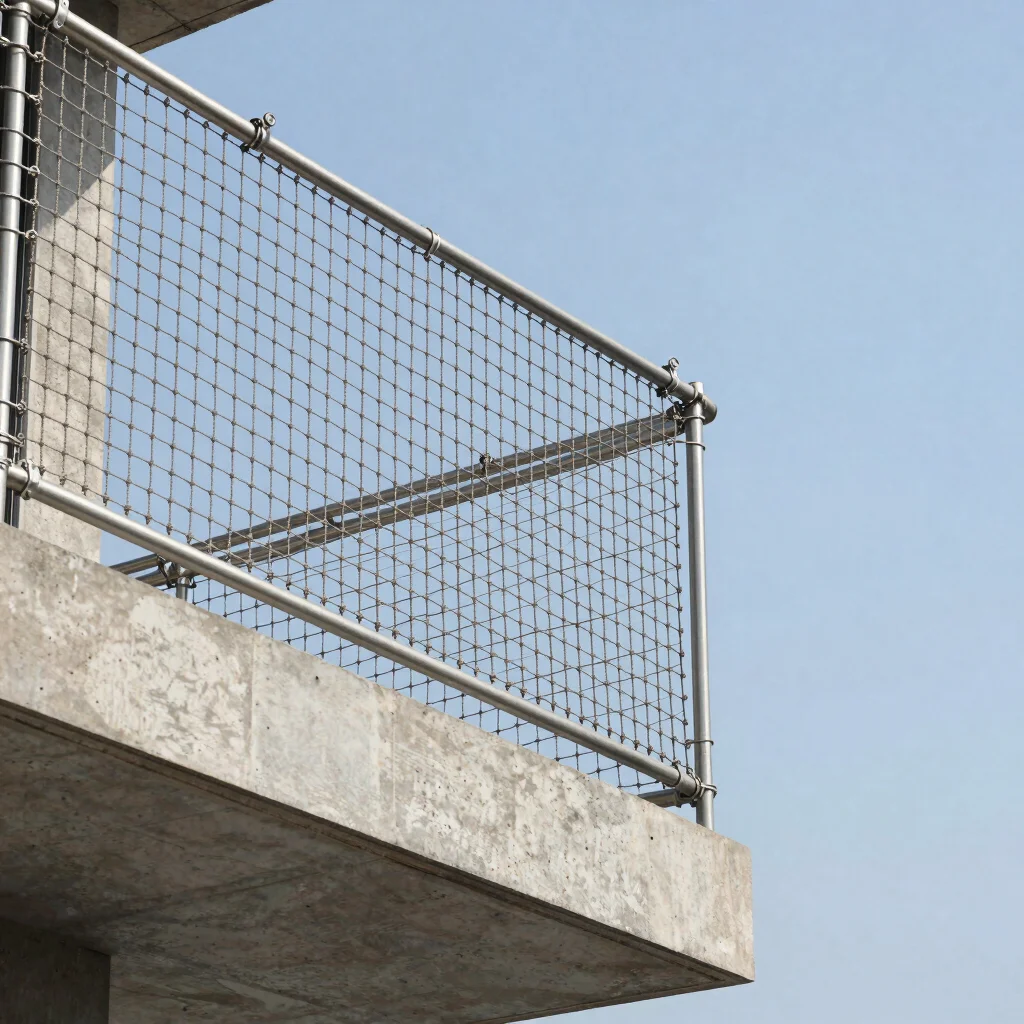
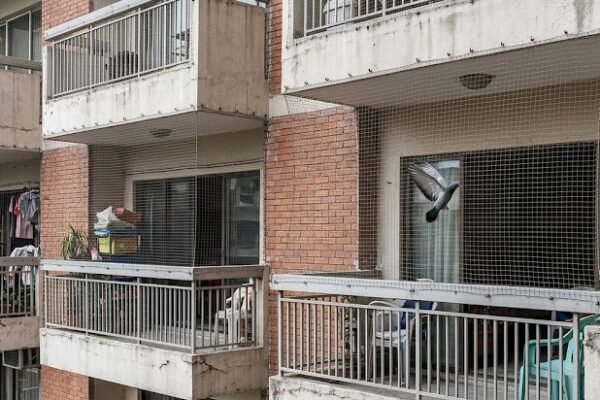
Netting is the closest thing to a permanent fix, because it removes access rather than relying on fear. When it covers the whole open face of a balcony, pigeons simply cannot land inside. As a result, nesting stops and droppings stop with it.
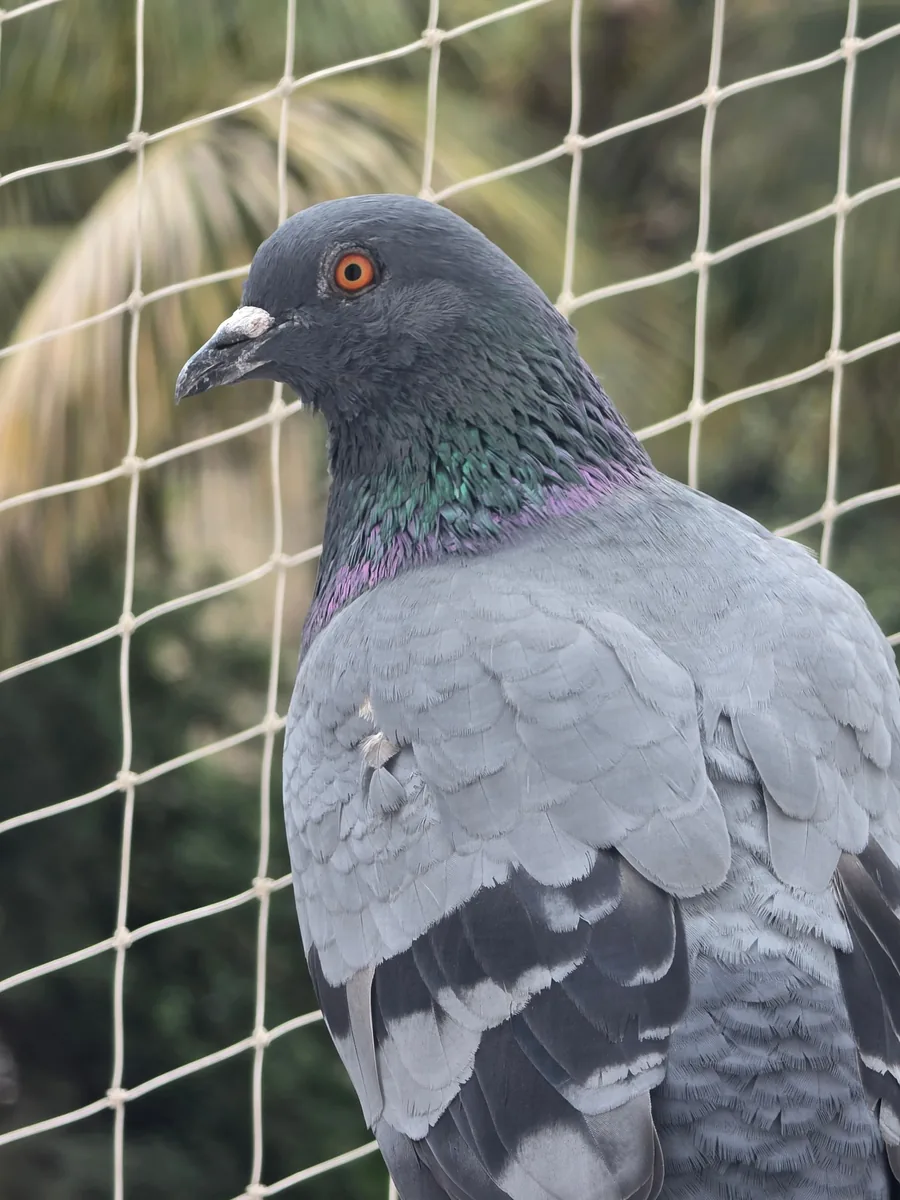
However, netting only works when the installation is complete. For instance, a gap of a few centimetres at the top, a loose edge near the railing or an uncovered AC bracket becomes a new entry point. The material matters too, since many Indian installers use HDPE (high-density polyethylene) or nylon nets, and you can read our comparison of HDPE vs nylon bird nets for the trade-offs. Mesh size matters too: the holes must be small enough that pigeons cannot push through, so see our guide to choosing the right mesh gauge before you buy.
Similarly, UV-stabilised nets contain additives that slow damage from sunlight, which matters especially on south- and west-facing balconies, which take the strongest sun. Ask the seller to state the material and UV treatment in writing rather than relying on a verbal promise.
Spikes, wires and gel: where they help and where they fail
Spikes and gel are spot solutions, so they suit a single parapet, a window sill or the flat top of an AC outdoor unit, where netting would be awkward. On the other hand, they do nothing to stop birds that can still reach the floor or a sheltered corner.
Spikes and wires
Generally, ICWDM describes stainless steel spike strips and taut wires as ways to make a ledge uncomfortable without harming the bird. Still, birds sometimes drop nesting material or droppings onto spikes until they form a platform, so you need to clear them now and then. Therefore, choose blunt-tipped strips designed for birds, not improvised nails or broken glass, which can injure birds and break the law.
Sticky gels
Polybutene gels are non-toxic, and they leave a tacky surface that pigeons avoid. Even so, ICWDM lists clear drawbacks: they look untidy, they can run down walls in heat, and they stiffen in cold. Moreover, their effect lasts roughly six months to two years, and it fades faster in dusty areas. So gel suits a small sign or ledge better than a whole balcony.
Why ultrasonic devices and fake owls fail to get rid of pigeons
Ultrasonic repellers sell well online, but the evidence does not support them for pigeons. In a 2014 study in the Journal of Pest Science, researchers at the Swiss Ornithological Institute tested a commercial ultrasonic device. Surprisingly, it showed no measurable effect on the behaviour or stress hormones of caged pigeons, and it did not deter free-living birds either.
Similarly, ICWDM states that ultrasonic sound is not effective on pigeons. It also adds that revolving lights, coloured flags, rubber snakes and owl models have little or no effect. Meanwhile, noisemakers mostly annoy people, while firecrackers work only briefly. In short, if a product promises to get rid of pigeons without any physical barrier, treat that claim with caution.
Remove food, water and nesting spots first
Even the best net works better when the balcony stops being attractive. In fact, ICWDM calls the removal of feeding, watering, roosting and nesting sites essential for long-term control. No method will get rid of pigeons for long while food keeps appearing. So start with this simple checklist:
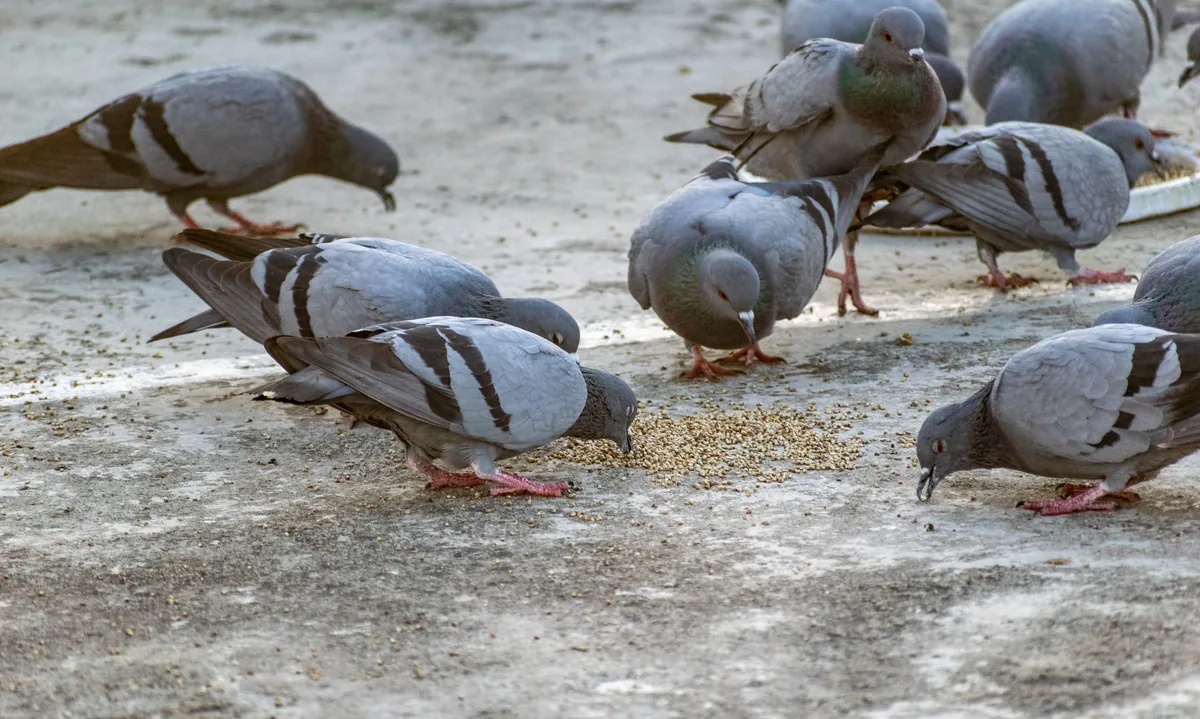
- Stop putting out grain or bread, and ask family members to do the same.
- Also keep pet food indoors and sweep up seeds from bird feeders or plant pots.
- Then fix dripping taps and empty trays of standing water under pots.
- After that, clear stored boxes, old furniture and unused coolers that create hidden corners.
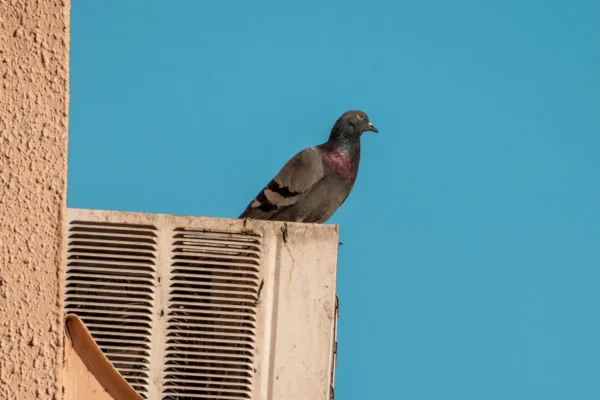
- Finally, check the gap behind the AC outdoor unit, because it is a favourite nesting spot.
Feeding is also a civic issue now. In July 2025, the Bombay High Court described feeding large congregations of pigeons as a public nuisance and a health risk, and it allowed Mumbai’s civic body to act against people who kept feeding at kabutarkhanas, as PTI reported. The Observer Research Foundation later noted that the court set up an expert panel to study the health impact.
What Indian law says before you remove a nest
Remember that the aim is to get rid of pigeons from your space, not to hurt them. Humane methods are not just kinder; they also keep you on the right side of the law. India’s Prevention of Cruelty to Animals Act, 1960 makes cruelty to animals an offence. Section 11 covers acts such as causing unnecessary pain or suffering and giving an animal a harmful drug. Poison baits and glue traps can easily fall into that territory, so avoid them completely.
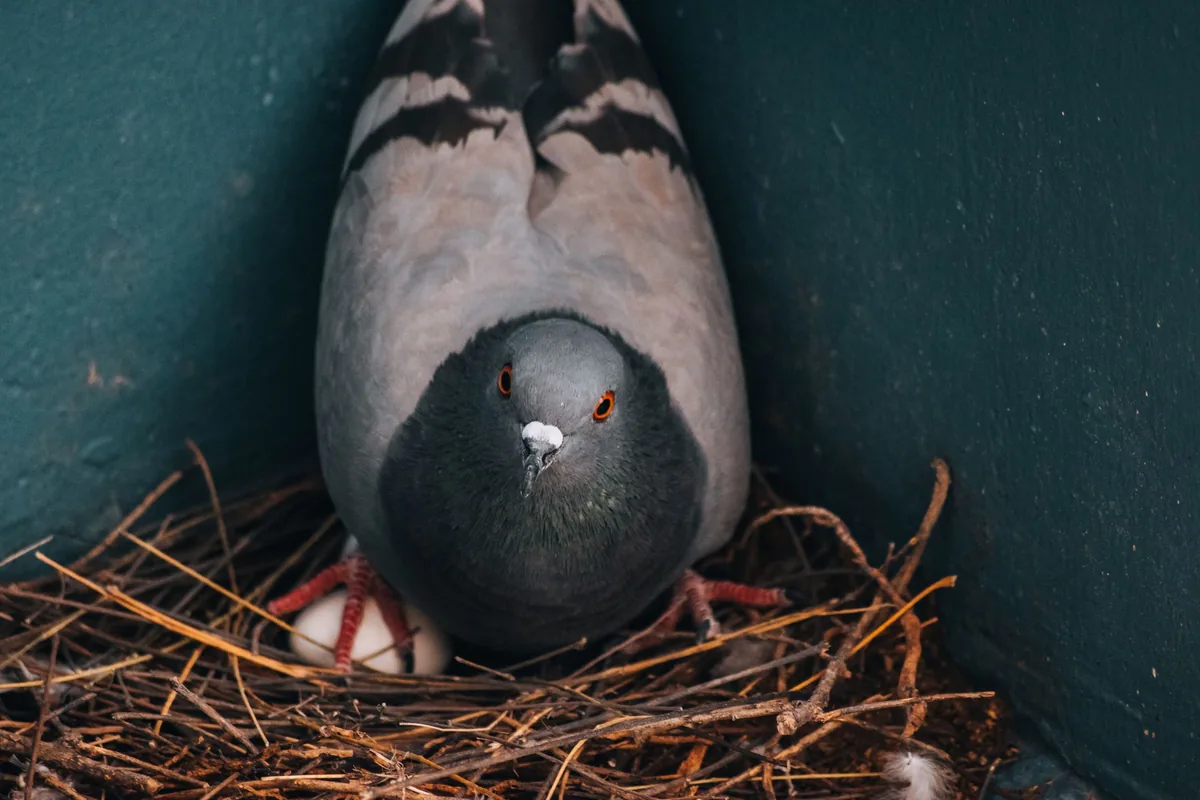
Separately, the Wildlife (Protection) Act, 1972 defines hunting to include damaging the eggs of wild birds or disturbing their eggs or nests. Many birds that visit Indian balconies, such as doves, sparrows and mynas, may be wild species. So if a nest holds eggs or chicks, leave it alone and wait until the young have flown. When you are unsure, contact your state forest or wildlife department, or a professional, before you act.
However, once a nest is empty, you can remove it and block the spot. ICWDM advises wearing gloves and bagging old nest material, because it can carry mites and lice.
Cleaning up safely after pigeons leave
Dried droppings can stir up dust when you sweep them. The CDC advises that large amounts of bird or bat droppings should go to professional cleaners, and it lists avoiding exposure to droppings as a way to lower the risk of histoplasmosis. For a small, lightly soiled balcony, though, basic care is usually enough:
- Lightly dampen droppings before scraping, so dust does not rise.
- Also wear disposable gloves and a well-fitting mask.
- Bag waste, then wash the area with detergent and water.
- Keep children, older relatives and anyone with a weak immune system away while you clean.
For more detail on diseases linked to droppings, read our article on the health hazards of pigeon droppings. If anyone at home has breathing trouble, fever or a persistent cough, see a doctor rather than guessing.
When to call a professional to get rid of pigeons
Some jobs are not worth the risk, especially at height. For example, fixing nets on a high-rise balcony means leaning out over a long drop, and that work belongs with trained installers who use harnesses and proper anchors. You should also call a professional when:
- when the balcony sits above the second floor or has no safe working platform;
- if pigeons nest inside a duct, shaft or exhaust opening you cannot reach;
- when droppings have built up over months in a large area;
- if your housing society wants a uniform look across the building.
Our guide to DIY vs professional bird net installation explains which small jobs suit a careful homeowner. Then, after installation, a few minutes of checking every month keeps the net working; see our tips on bird net maintenance and cleaning.
Key takeaways
- Netting that fully covers the open side of a balcony is the most dependable way to get rid of pigeons.
- Spikes and gel suit single ledges and AC tops, but they need upkeep.
- By comparison, ultrasonic devices and fake owls have little or no evidence behind them for pigeons.
- Cutting off food, water and hidden corners also makes every other method work better.
- Leave nests with eggs or chicks alone until they are empty, and never use poison or glue traps.
Get rid of pigeons: FAQs
Blocking access with a properly fitted net is the quickest lasting fix, because it removes shelter. At the same time, remove food, water and clutter so the birds lose their reasons to return.
They often try, because pigeons return to sites that offered shelter. Once the nest is empty, block the spot with netting or spikes so they cannot settle again.
Avoid it, because Indian wildlife law treats disturbing the eggs or nests of wild birds as hunting, so wait until the chicks leave, or ask your forest department for advice.
Usually not for long, since wildlife damage specialists rate visual scare devices as having little or no lasting effect, so rely on physical barriers instead.
You can usually clean small amounts with gloves, a mask and damp wiping. However, large build-ups should go to professional cleaners, and anyone with symptoms should see a doctor.
Bird Nets Zirakpur installs balcony and pigeon nets in Zirakpur and across the Tricity, so contact us if you would like a site visit.
Sources
- Internet Center for Wildlife Damage Management, “Pigeon Damage Control and Prevention Methods” (undated, accessed October 2026)
- ICWDM, “Pigeon Biology” (undated, accessed October 2026)
- Jenni-Eiermann, Heynen and Schaub, Journal of Pest Science, “Effect of an ultrasonic device on the behaviour and the stress hormone corticosterone in feral pigeons” (January 2014)
- US Centers for Disease Control and Prevention, “Reducing Risk for Histoplasmosis” (24 April 2024)
- India Code, “The Prevention of Cruelty to Animals Act, 1960” (accessed October 2026)
- iPleaders, “Section 11 of Prevention of Cruelty to Animals Act, 1960” (12 February 2023)
- Government of Andhra Pradesh (APCRDA), text of “The Wildlife (Protection) Act, 1972” (accessed October 2026)
- PTI via The Week, Bombay High Court ruling on pigeon feeding (30 July 2025)
- Observer Research Foundation, “Of Street Dogs and City Pigeons: Law, Sentiment, and Public Health” (22 August 2025)