
Cricket practice net: quick answer
A good cricket practice net for home or club use is a lane about 3 to 4 metres wide, long enough for your bowlers, with a roof net and side nets that reach the ground. Choose a mesh of around 50 mm or smaller for a leather ball, UV-treated HDPE or nylon twine, and a sturdy frame with no gaps.
A cricket practice net lets you bat and bowl for hours without chasing the ball across a ground, a terrace or a neighbour’s garden. However, buying one is confusing. Listings mix up mesh sizes, materials and frame types, and very few explain what actually matters for safety and durability.
This guide works through the choices one by one: lane size, mesh, net material, knots, roof and side netting, safety and care. It uses the official Laws of Cricket and published facility guidance from the England and Wales Cricket Board (ECB), so you can compare sellers on facts rather than on adjectives.
What is a cricket practice net, and which type do you need?
A practice net is a netted lane, or cage, that surrounds the batter and the pitch so the ball stays inside. Most setups fall into one of four types, and the right one depends on your space and on who will use it.
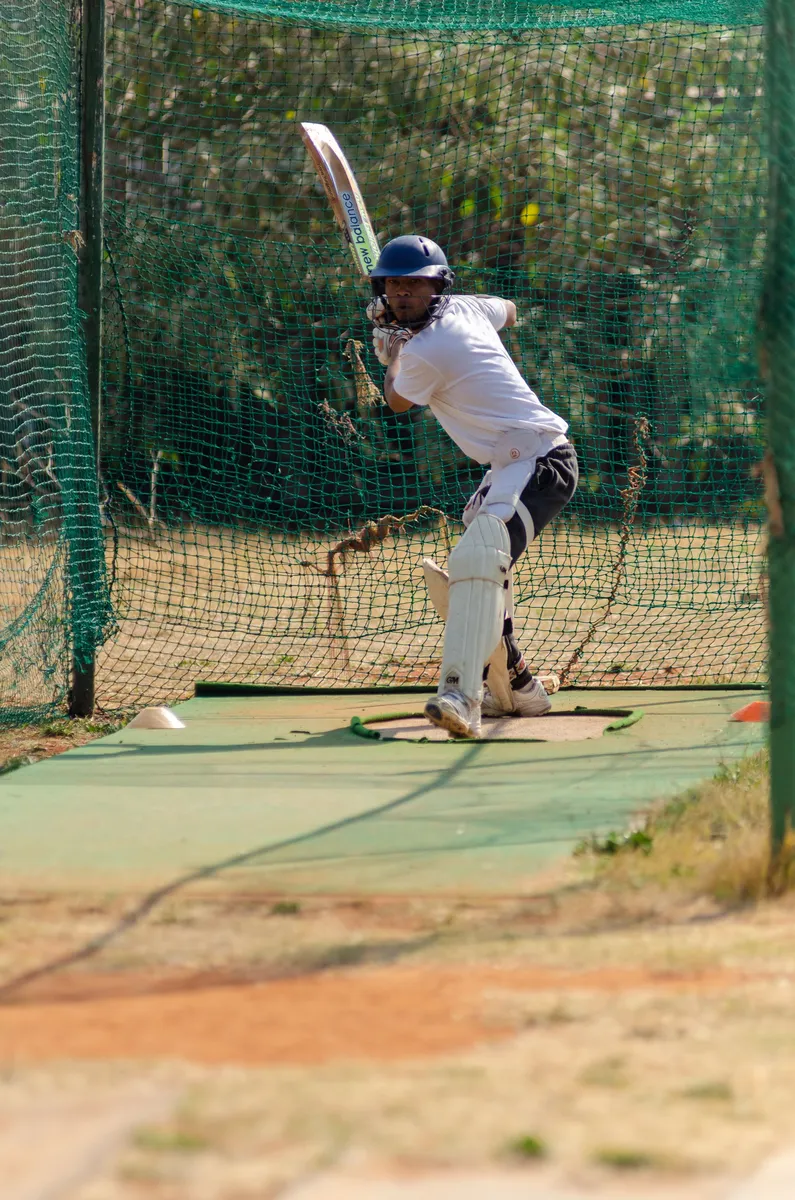
- Fixed cage: a steel frame with roof and side nets over a full or short pitch. Because it is permanent, it suits clubs, schools, academies and large plots.
- Backyard or terrace net: a smaller fixed or semi-fixed lane for one or two players. It also suits homes with an open yard or a strong terrace.
- Portable frame net: a pop-up or pole frame you can move and store. So it suits renters and families who need the space for other things.
- Indoor net: netting hung from tracks inside a hall. Therefore it suits centres that train during the monsoon or at night.
What size cricket practice net do you need?
First, start with the pitch itself. Under Law 6 of the MCC Laws of Cricket, a pitch is 22 yards (20.12 m) long and 10 feet (3.05 m) wide. Therefore, a full-length lane needs more than 20 metres of netted length, plus space behind the stumps and some run-up for bowlers.
For width and height, the ECB facility guidance for indoor cricket centres gives useful reference figures. It recommends a single bay at least 3.66 m wide, up to 4 m, and a horizontal top net between 4 m and 5 m high. These figures are for purpose-built indoor centres, so treat them as a benchmark rather than a rule for a home net.
| Use | Typical length | Width | Notes |
|---|---|---|---|
| Full practice lane | More than 20.12 m plus run-up | 3 to 4 m | Best when bowlers need a full run-up and pitch length |
| Batting drills with a bowling machine or throw-downs | Shorter than a full pitch | About 3 m or more | Since ball speed stays controlled, a shorter lane often works |
| Children’s or terrace lane | Fit to the space available | About 3 m | Use softer balls when the lane is short |
| Bowling-only target net | A few metres | Narrow | Catches deliveries, but it is not meant for batting |
Measure your space before you shortlist a product, because the net itself is only part of the footprint. Then subtract room for the frame, the anchors and a safe walkway around the outside of the net.
Which mesh size is right for a cricket practice net?
Mesh size is the width of each square opening in the net. Since the ball must never pass through, the mesh has to be clearly smaller than the ball. Our mesh gauge guide explains how sellers measure mesh, and the same terms apply to sports nets.
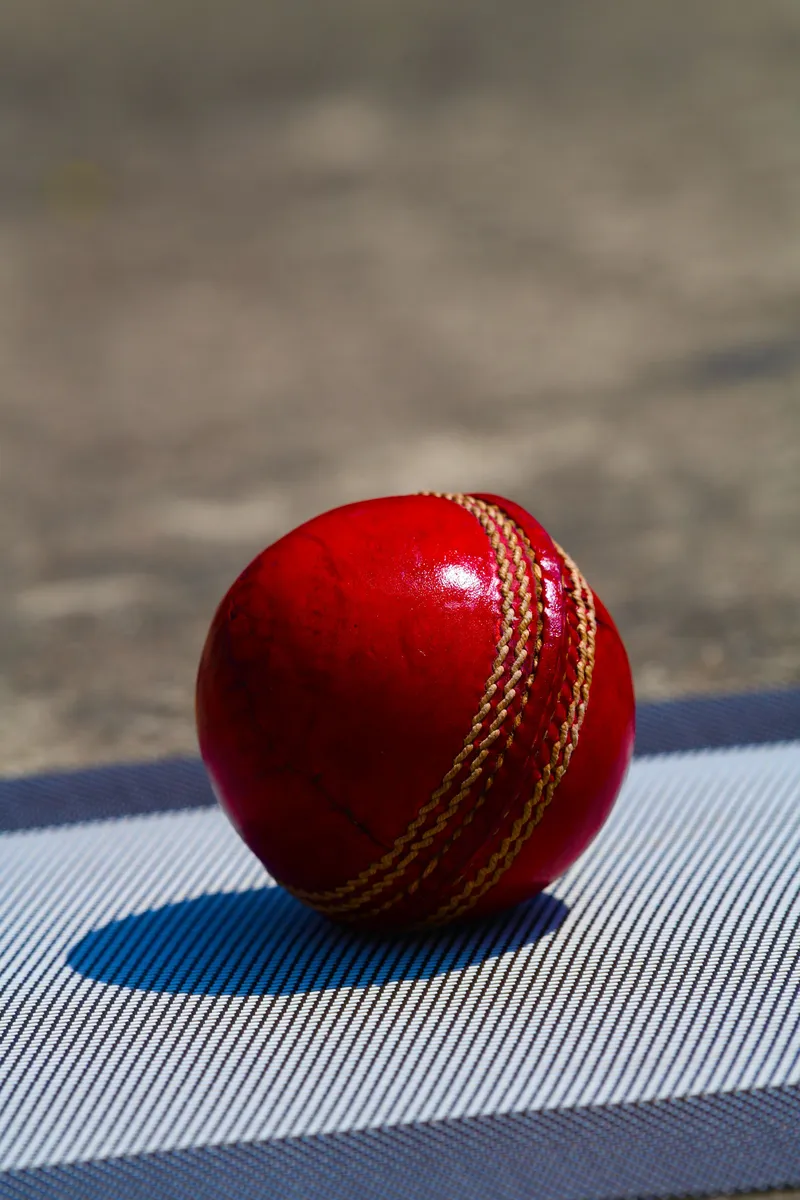
Law 4 of the MCC Laws says a men’s ball has a circumference of 22.4 to 22.9 cm. That works out to a diameter of roughly 7.1 to 7.3 cm. Similarly, women’s and junior balls are only slightly smaller, at 21.0 to 22.5 cm and 20.5 to 22.0 cm in circumference.
The ECB guidance specifies white nylon netting with a mesh of about 48 to 50 mm for side and roof nets in indoor facilities. That leaves a comfortable margin below the ball’s diameter. If you mainly play with tennis or rubber balls, measure the ball you use and choose a mesh well below its width, because those balls can squash and push through larger openings.
HDPE, nylon or polyester: which cricket practice net material lasts longest?
Most cricket practice net listings in India offer HDPE (high-density polyethylene), nylon or polyester twine. Each behaves differently in sun and rain. The US Fish and Wildlife Service guide to net materials summarises the main differences, and our HDPE vs nylon comparison for bird nets covers the same materials in more detail.
| Material | Strengths | Weaknesses | Good for |
|---|---|---|---|
| HDPE (polyethylene) | Absorbs no water, so it stays light in the rain | Sunlight breaks it down, so it needs a UV inhibitor | Outdoor nets, especially in sunny, wet climates |
| Nylon | Strong and flexible | Absorbs water, stretches, and loses 10 to 15% of its strength when wet | Indoor nets, because they stay dry |
| Polyester | Does not weaken when wet and dries quickly | Check the maker’s UV rating, since the FWS guide does not cover it | Outdoor nets when sagging is a concern |
UV-stabilised, or UV-treated, means the maker has added chemicals that slow down damage from sunlight. This matters a lot in Indian summers. For example, Garware Technical Fibres lists UV treatment as a feature of its cricket nets. Ask any seller to confirm in writing whether the twine is UV-stabilised.
Should you choose knotted or knotless netting?
Traditional nets are knotted at every crossing point. Knotless nets are woven so the strands interlock without bulky knots. According to the US Fish and Wildlife Service guide, knots can weaken a line by 15 to 35%, and knotless polyethylene is stronger than knotted polyethylene of a similar thickness.
In practice, also ask the seller how holes are repaired, because the method differs between knotted and knotless nets. Sellers describe twine thickness in different ways, such as millimetres or ply. So ask for the twine diameter in millimetres and compare like with like.
Roof nets, side nets and indoor cricket practice net setups
A practice lane is only as safe as its weakest gap. The ECB guidance gives several details that also make sense for smaller setups.
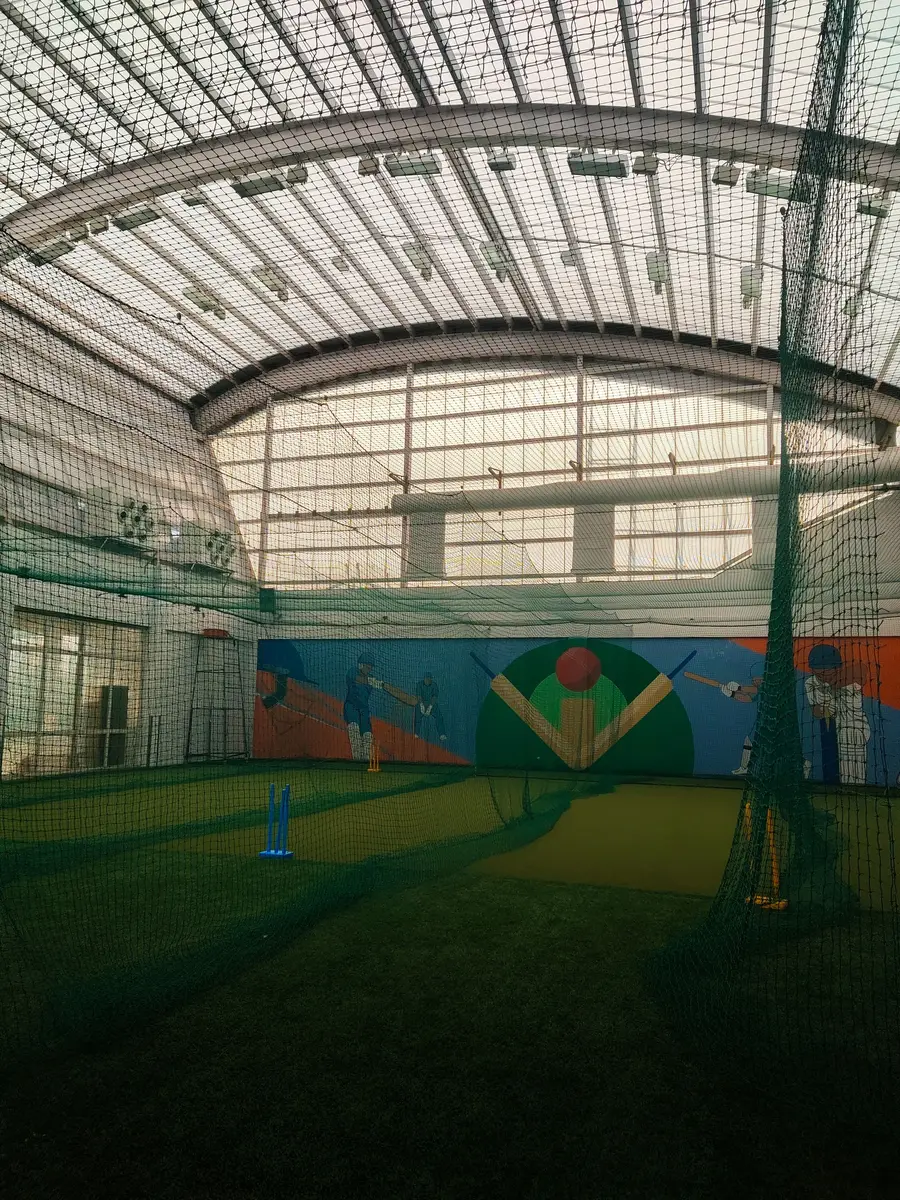
- First, leave no gaps between the roof net and the side nets.
- Let side nets drape at least 0.3 m onto the floor, so balls cannot roll underneath.
- Also keep at least 1 m between the netting and any wall.
- Do not pull the net so tight that balls rebound dangerously towards the batter or bowler.
- Reinforce the leading edges of roof netting with tape, as the ECB recommends for indoor centres.
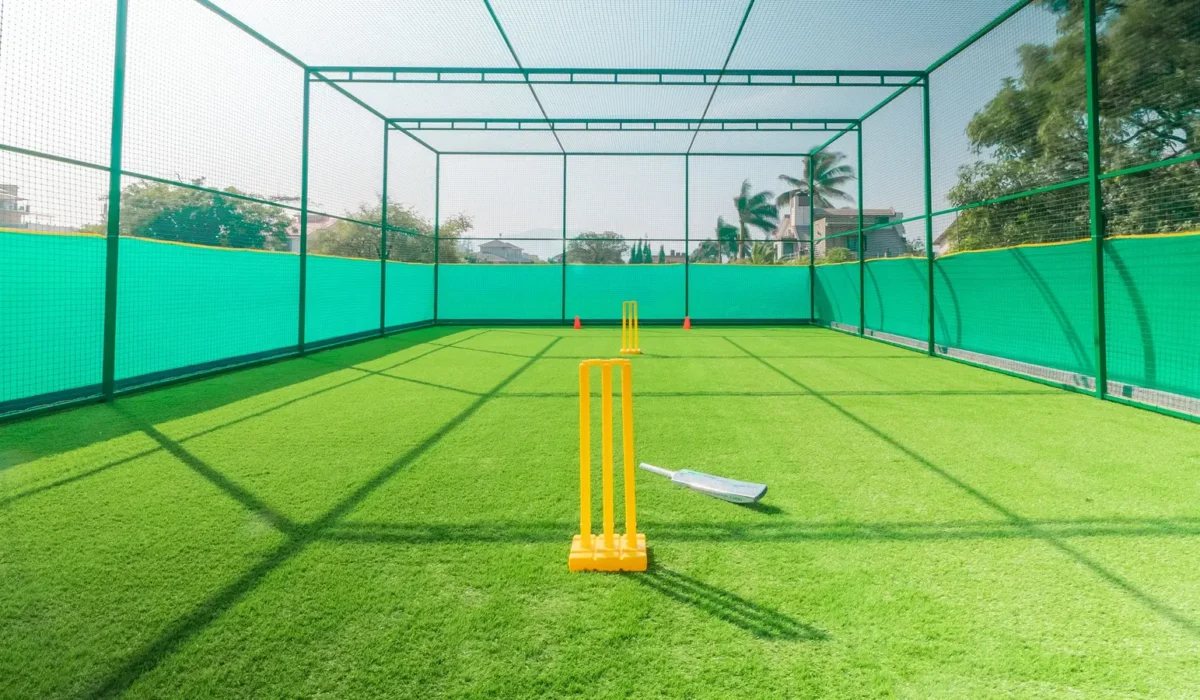
Some outdoor cages also add a shade-cloth skirt along the lower part of the side nets, as in the photo at the top of this article. If you want one, ask whether it is part of the quote.
Safety checklist before the first session
Home nets bring the game close to windows, cars and people, so plan carefully. Before the first session, go through this list.
- First, make sure the frame stays firmly anchored even in strong wind.
- Make sure no part of the lane points at a road, a glass window or a neighbour’s balcony without full netting.
- On a terrace, check the parapet height and roof strength with a structural engineer before fixing a frame.
- Use balls that suit the space, because a short lane and a leather ball are a risky mix.
- Supervise children, and keep spectators outside the net while anyone bats or bowls.
- Hire trained installers with safety equipment for any fixing work at height, such as roof nets or terrace frames.
How to care for your cricket practice net
Even a little care adds years to a net. Inspect it every few weeks during the season, and repair small holes before they grow. Also, remove leaves and debris from the roof net, because extra weight and trapped moisture strain the twine.
If you use a portable net, take it down and store it dry during long breaks or heavy monsoon spells. Fixed nets need a check of the frame, the ties and the ground anchors after storms. Our net cleaning and maintenance tips for bird nets include cleaning steps that work well for sports nets too.
Questions to ask before you buy
- First, what is the mesh size, and how do you measure it?
- Which material is the twine, and is it UV-stabilised?
- What is the twine diameter in millimetres?
- Also, is the netting knotted or knotless?
- Does the price include the frame, roof net, ground anchors and installation?
- Finally, what does the warranty cover, and for how long?
Get the answers in writing. Then compare at least two or three quotes on the same specification, instead of comparing headline prices alone.
Key takeaways
- Plan the lane around your space; a full pitch is 20.12 m long, and the ECB suggests bays of 3.66 to 4 m wide.
- Choose a mesh well below the ball’s diameter, such as the 48 to 50 mm the ECB uses for indoor nets.
- Pick UV-stabilised HDPE or polyester for sunny outdoor nets, and remember that nylon weakens when wet.
- Close every gap between roof and side nets, and let the side nets touch the ground.
- Inspect the net regularly and leave work at height to trained installers.
Cricket practice net: FAQs
For a leather ball, a mesh of around 50 mm or smaller is a safe choice. ECB guidance for indoor centres uses about 48 to 50 mm. For tennis or rubber balls, measure the ball and pick a mesh well below its width.
ECB guidance for indoor centres recommends a single bay at least 3.66 m wide and up to 4 m. Home nets can be narrower, but a lane of about 3 m or more leaves room for the batter to swing safely.
HDPE absorbs no water but needs UV stabilisation to resist sunlight. Nylon is strong but absorbs water, stretches and loses some strength when wet. For sunny, rainy outdoor sites, UV-stabilised HDPE or polyester is usually the practical choice.
Possibly, but first check the roof strength and parapet height with a structural engineer, and confirm your society’s rules. Use full netting on every side, and hire trained installers for any fixing work at height.
It depends on the material, UV stabilisation, sunlight, rain and how often you use it. Regular inspection, quick repairs and storing portable nets dry during long breaks all help the net last longer.
Sources
- MCC, “Laws of Cricket: Law 6, The pitch” (accessed October 2026)
- MCC, “Laws of Cricket: Law 4, The ball” (accessed October 2026)
- England and Wales Cricket Board, “TS2 Cricket Specific Indoor Centres” facility brief (accessed October 2026)
- England and Wales Cricket Board, “Indoor Sports Halls with Cricket Provision” facility brief (accessed October 2026)
- US Fish and Wildlife Service, “Net materials” (accessed October 2026)
- Garware Technical Fibres, “Cricket Nets” product page (accessed October 2026)